
Future Trends in Branding and Marketing for 2026

As we approach 2026, branding and marketing are undergoing a profound transformation. Rapid technological advancements, evolving consumer behaviour, and increasing demand for authenticity are reshaping how brands communicate, compete, and grow. Traditional marketing tactics are no longer enough. To remain relevant, brands must adopt future-focused strategies that blend innovation, personalisation, and purpose.
This in-depth guide explores the future trends in branding and marketing for 2026, offering practical insights, examples, and strategic direction for businesses, marketers, and brand leaders.
1. Artificial Intelligence Becomes the Backbone of Branding
Artificial Intelligence (AI) is no longer experimental; it is foundational. In 2026, AI-driven branding enables smarter decision-making, real-time personalisation, and scalable creativity.
Key Applications:
- AI-powered customer insights and segmentation
- Predictive analytics for campaign planning
- Automated content generation and optimisation
2. Hyper-Personalisation Across the Entire Customer Journey
Consumers in 2026 expect brands to understand them deeply. Hyper-personalisation moves beyond first names in emails to real-time, behaviour-driven experiences.
Examples:
- Personalised website experiences
- Dynamic email and ad creatives
- AI-driven product recommendations
Brands that master personalisation will see higher engagement, loyalty, and lifetime value.
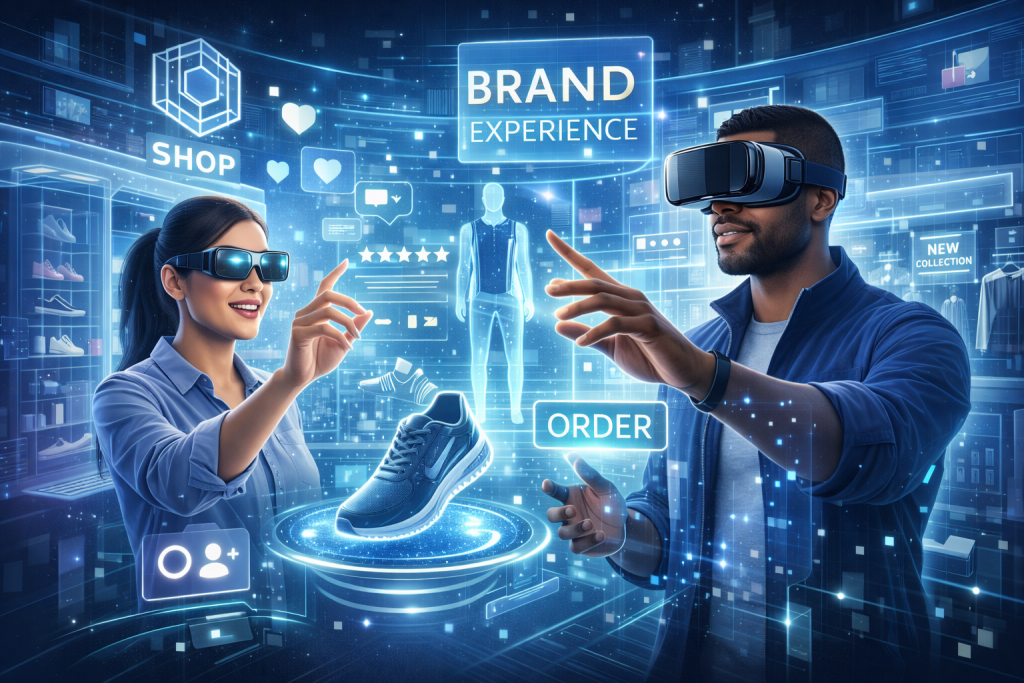
3. Immersive Branding Through AR and VR Experiences
Augmented Reality (AR) and Virtual Reality (VR) are redefining experiential marketing. These technologies allow consumers to interact with products and brand stories in immersive digital environments.
Use Cases:
- Virtual product try-ons
- Interactive brand storytelling
- Virtual showrooms and events
4. Sustainable and Ethical Branding as a Growth Strategy
Sustainability is no longer optional. In 2026, ethical branding directly impacts purchase decisions, brand loyalty, and reputation.
Key Focus Areas:
- Transparent supply chains
- Eco-friendly packaging
- Authentic sustainability storytelling
Brands that practice genuine responsibility, not greenwashing, will lead their industries.
5. Privacy-First and Trust-Based Marketing
With increasing regulations and consumer awareness, data privacy is a critical branding pillar. Trust is becoming a competitive advantage.
Best Practices:
- Clear data usage policies
- Consent-based marketing
- Secure customer data systems
Trust-driven brands build longer-lasting customer relationships.
6. The Evolution of Influencer Marketing
Influencer marketing in 2026 prioritises authenticity over reach. Micro and nano-influencers deliver higher engagement and stronger trust.
Emerging Trends:
- Long-term creator partnerships
- Co-created brand content
- Community-first influencer strategies
7. Interactive and Shoppable Content Dominates
Content is becoming more interactive and transactional. Shoppable videos, social commerce, and interactive storytelling reduce friction between discovery and purchase.
Formats to Watch:
- Shoppable short-form videos
- Interactive quizzes and polls
- Live-stream shopping events
8. Voice Search and Conversational Marketing
Voice-enabled devices and conversational AI are changing how consumers search and engage.
Optimization Tips:
- Focus on natural language keywords
- Optimize for featured snippets
- Use AI chatbots for real-time engagement
9. Purpose-Driven Branding and Community Building
Brands are becoming community leaders, not just sellers. Purpose-driven branding fosters emotional connection and advocacy.
Strategies:
- Brand-owned communities
- Value-driven content
- Social impact initiatives
Communities turn customers into long-term brand advocates.
10. The Future of Content: Human Creativity + AI Efficiency
AI accelerates content creation, but human creativity ensures authenticity, emotion, and cultural relevance.
Winning Approach:
- AI for research, drafts, and optimization
- Humans for storytelling, tone, and strategy
This balance defines successful content marketing in 2026.
11. Predictive Analytics Enables Proactive Marketing
Predictive analytics allows brands to anticipate trends, customer needs, and campaign outcomes.
Benefits:
- Smarter budget allocation
- Reduced marketing waste
- Proactive customer engagement
Conclusion: Building Future-Ready Brands for 2026
The future of branding and marketing in 2026 is intelligent, immersive, ethical, and deeply human. Brands that embrace AI, prioritise trust, invest in experiences, and stand for meaningful values will outperform competitors in an increasingly crowded digital landscape.
Success in 2026 belongs to brands that don’t just follow trends, but strategically evolve with them.


Leave a reply




Brand with Cynthia (BWC) is a marketing blog sharing expert insights on branding, digital marketing, strategy, and business growth.